Friday, June 29, 2007

Expats in Asia: Want to star in a TV show?

Unlike Joe Mondello over at Paintroller blog, who has become an "extremely minor internet celebrity" thanks to his video resume (in Korean) and is turning down TV interviews, I don't get many invitations to go on TV. So when this email arrived out of the blue I was intrigued:

From: Chandramohan Nag
Date: Tue, 26 Jun 2007 15:48:35 +0800
To: Jon Allen

Hi

Greetings!
My name is Nag , a television producer working from Singapore, i just happen to see your blog , . I'm currently working on an 8-part television series called Global expats for a local television channel. It aims to examine and track the lives and livelihood of expatriates who choose to work, live and play in Asia. I would like to feature you in our series. We would like you to share your Expat experience what kind of a cultural shock you had? How did you cope? What are the things you like about the new place? How is different is life away from home etc. what's the culture shock you had first moved in? What efforts you take to adapt to the culture? (For example learning language, music, art etc? how you socialize with local people etc.

If you are interested pls. drop me line : cm_nag [at] yahoo.com

We will take it from there.

Regards
Nag

So I exchanged a couple of emails with him but after I told him my age, and gave him a few details about our interests, poor Korean language skills, minimal social life and how we only have a small number of Korean and expat friends, he seemed to lose interest!

But maybe, if you're younger, sexier, speak a bit of Korean and have lots of Korean and expat friends you might be more what he is looking for. He did not give me any more details, so drop him a line if you are keen and please do let me know how you get on. Did any other bloggers get his email?

This forum also has a few 'media requests' for British expats if you have a burning desire to get more attention.

Thursday, June 28, 2007

Korean Blogs that have lasted the year

Today marks the first anniversary of this blog. Yes, one year ago I tentatively began this blog about our impending trip to Seoul. 150 posts later I'm still blogging and still bringing a small but loyal band of readers a mixture of news, events, photos and items of interest on my life in Seoul.

To celebrate this anniversary I decided to take a visit to The Korean Blog List to see how many other bloggers that added their blog to the list around the same time as I did are still blogging.

Feet Man Seoul Continues to grow his blog with daily posts on Korean fashion tips and stars and has expanded with Korean language posts as well.

Art Life and Everything Penelope stopped posting in December 2006.

Azikiwe Chandler Azikiwe is still blogging and writing a book.

Lazy Saturday Suegene is still busy blogging about knitting from New England.

Just Wandering Jackie is still blogging and has decided to stay another year in Korea. She's just got a new job at a University.

A Year In Korea Not sure what he's called, but he lasted the year and he is about to leave Korea very soon.

Deeper Shade Of Seoul Jes is still here blogging about her life.

Dae Han Min Decline Jon is busy DJing and has pictures of people vomiting and other happier scenes from punk rock concerts on his blog.

I Dream Therefore I Am Jimong has moved his blog to wordpress and continues to blog about Korean items of interest from Vancouver.

A Canadian In Korea Eric has posted a few updates and is back in Canada soon.

A Welshman With Seoul :P Now defunct.

DeiHanMinGuk Discoveries Goulash updates his blog on an occasional basis.

Living On The Flipside Amy provides very detailed updates on her life almost every day.

Flora In Seoul Flora's stopped in April, and has started facebooking. (Is that a verb yet?)

Show Dae Jang Geum On BBC Alice in London started a blog about her quest to get the BBC to air the Korean drama 'Dae Jang Geum' in the UK. Her latest post in May indicates that the BBC would love to share it with the British viewers, but sadly there just isn't enough time in the day to show it.

Seoul Searching This one disappeared.

Seoul Brotha Adrian was on my blogroll until last month when I noticed he stopped posting in December last year.

Simply Korean This one has disappeared too.

Hidden Confessions Jon stopped posting in Sep 2006.

Beloved Babbling Beloved is back in the US and still babbling occasionally.

Noraebang He hasn't posted since April

Peace Of Rice: 1/150,000 KADs Soon Young is still blogging frequently.

Almost Urban -Canadian Student Henry has been blogging steadily during the year. His postings on his trip to Mt Kumgang in North Korea are excellent.

The Daily Kimchi The indefatigable Gdog has continued to blog a post every day since he began his teaching job last year. His blog also provides the largest number of referrals to this blog for which I am always grateful.

So, out of the 24 blogs started only 8 have stopped blogging. That is quite a good record I would say. Congratulations to all those that have lasted a year. Here's to another year of blogging, and to the 36 blogs that have been added to the Blog List since my last roundup in April can you last the year?

Wednesday, June 27, 2007

IFC Seoul Construction site in Yeouido

Back in November last year I mentioned the start of construction of the International Finance Centre Seoul. [Their website has to be the least informative site I have ever visited.]
Days after that photograph of the trees was taken, the hoardings went up and work began in earnest. As you can see from this shot the hoardings are a work of art in themselves. These drilling machines have a certain 'transformers' look about them.

IFC Seoul construction site, with hoardings and drilling machines
This was the view yesterday from the Shinhan bank office overlooking the site. The LG Twin towers are opposite.

View of IFC Seoul construction site from Shinhan buildingAnd this is the view from the other direction looking towards the Shinhan building, peeking through an open door on to the site.

View of IFC Seoul construction siteAs you can see they are going deep with the underground levels. There is a continuous stream of heavy trucks removing the earth. Here you can see the drilling machines at work.
View of IFC Seoul construction site
Across the road is Parc1. The ground breaking ceremony was on the 5th June 2007 and the hoardings went up around the whole site very quickly, but there is not much else to see at the moment.

The Parc1 site was the last undeveloped lot on Yeouido, with the possible exception of a small plot near Building 63. However there's a two story KBS building, with a large area being used a car park, right beside the site of the subway station currently under construction on line 9. I think this is a prime target for redevelopment. The next most likely place is a block directly opposite the National Assembly building occupied by some elderly and shabby low rise blocks, used again by KBS. I can already sense the wrecking crews moving in.

Longer term, I spotted an announcement that MBC, a large broadcasting company, are planning to move their headquarters out of Yeouido across the Han river to the Digital Media City currently under construction not far from the World cup stadium in 2011. This will no doubt be followed by the swift redevelopment of the sizeable plot they currently occupy. So the rumble of construction trucks will continue around Yeouido for many years to come, as I think it will do around the rest of the country.

Here's a google-earth snapshot with the sites marked.
Google Earth Image of Yeouido with buildings discussed marked on

Monday, June 25, 2007

Itaewon Restaurant Discount card

This looks like it could be useful if you live in Seoul and eat out or go shopping in Itaewon. American Bill Swisshelm has launched a discount card called Eat-A-One. Members can get a discount of up to 10% at around 30 restaurants, shops and even dance studios in the neighbourhood.

Gold member merchants such as Chakraa, Italonia, La Casa Loca, Pharoah's restaurant, Toque Diner, Namaste restaurant and Saigon Grill offer a 10 percent discount. Silver member merchants, such as Santorini, Smokey Saloon, Flying Pan and Taco Amigo, offer either a discount or a benefit such as a free drink. Discounts only apply to the cardholder and a guest.

There are also discounts at other Itaewon shops such as at the dance studio You Can Dance, Well-Being Shop and the English bookstore What The Book.

A one year membership at Eat-A-One costs only 25,000 won, Bill reckons you could save between 300,000 to 500,000 won a year depending on how often you use the card.


For more details check out his website www.eataone.com. Story from Korea Times, H/T SeoulSteves.

Update: The card also gives a 20% discount off tickets for the show Nanta. Two tickets will almost save you the cost of the card straight away.

Saturday, June 23, 2007

Comedy in Seoul tomorrow

Sorry for the short notice, but I only just read my Seoul Selection newsletter last night.

Tomorrow night, for one night only, Perry Kutz and Kurt Green are doing a comedy show in Itaewon at the B1 Lounge.

These two professional comedians from the United States, have been brought over to Korea for a one night only show in Itaewon. I've not heard of them before, but it's the first comedy I've seen advertised since I've been here. I emailed BH Promotions yesterday and got two tickets, so I guess they have not sold out yet. Let me know if anyone else is planning on going.

Venue: the B1 Lounge, Itaewon, line 6, exit 1. Go out exit 1, turn right at KFC, walk up about 20 meters. The B1 Lounge is on your left.

Date : June 24 2007

Time: Doors open at 5pm. Show starts at 6pm. General seating.

Tickets: 35,000 won, includes one free drink. Tickets are on sale in advance at the venue (open everyday 7pm until late).

Reservations: by email only at thebhpcompany @ yahoo.com.

Space is limited, please reserve/buy advance tickets early.

For more information, call Kirstie at 016-695-4624.

[All details from Seoul Times]

Friday, June 22, 2007

The best bread in Seoul

Daeguowl's observation about the difficulty in obtaining decent bread, now that he has arrived in Korea, reminded me that I have not mentioned the best 'Backerei Konditorei' that we found in Seoul. If you are tired of the wonderloaf, crustless pap that you get in your local Paris Baguette, Tous les Jours or Crown Bakery, then head over to Richemont in Hongik

Richemont bakery. View of the outside , Hongik University.

It's a couple of minutes walk from Hongik University subway station on line 2. Take exit 6 from the station, continue walking along the main road and turn left at the traffic lights on to the road leading up to the university entrance. The bakery is just there on the corner on your left. It's open until 10pm. It's marked on HongdaeHongdae's flickr map.

The bread is a bit more expensive that that of the chain bakeries but it's well worth it. They do a very good sour dough bread.
Richemont bakery, bread selection
The cakes are good too.
Richemont bakery, cake selection
The pastries are difficult to resist
Richemont bakery, savouries selection
But don't get caught out by these savoury doughnuts on the bottom right in this picture. I bought one expecting a sweet sugary jam filling and was surprised by a curry flavour filling of vegetables.
Richemont bakery, pastries selection

If that's too far to travel then the Paris Croissant chain is an acceptable susbstitute. There are branches around the city, there's one at the Gwanghwamun end of the Cheonggyecheong opposite the huge snail-like sculpture.

SaraDevil found a good place for bagels in Daegu, and Queen for a year found the Strohrer bakery in Ulsan, but alas, she didn't let on where exactly.

Thursday, June 21, 2007

What sort of English are they teaching the Koreans?

The JoongAng Daily newspaper produces a weekly supplement titled 'Think English'. It has a number of different sections including translations of recent news items and general English comprehension tests with Korean translations. (They should maybe rename it 'See English, Read Korean' but I guess it doesn't have quite the same ring to it).

There is a section titled 'Real Vocabulary', contributed by Kenny Kim, which consists of six sentences with multiple choice options to fill in the blanks for the missing words. Each week I look at it and spot at least one grammatical error or nonsensical sentence. Two weeks ago he set a record with five out of six sentences having at least one problem. My copy of the newspaper has now been recycled and sadly they do not seem to archive that section of the paper on the web, so I cannot share with you his mistakes.
Last Saturday's issue was a welcome change when I could not find any mistakes in that section. Well done Kenny, keep it up, I'll be checking back next week.

What did catch my eye though, was on the next page in the 'Fun Fun' section: [Readers who are offended by four letter words should NOT click to enlarge on this scan below]

scanned section of JoongAng daily Think English
Well I certainly wasn't expecting that type of language in a family newspaper. Can anyone translate the article please? I am fascinated to know what advice they are giving.

Perhaps the Think English staff have been to Itaewon, The westerner's ghetto area in Seoul, seen the name of this shop, and thought it a perfectly acceptable word to discuss?

Or maybe they've been watching the TV show Six Feet Under where the characters swear in almost every other sentence.

Meanwhile the Korea Times 'The Learning Times' supplement recently translated a dialogue from the movie The Devil wears Prada, underneath the headline 'Good Will Hunting'. I wonder if anyone noticed?

Wednesday, June 20, 2007

Trip to Taipei, Taiwan

The recent pause in posts has been due to a short break we've taken in Taipei, the capital of Taiwan.

The two and a half hour flight from Incheon with Asiana Airlines was a bargain 270,000 won each.

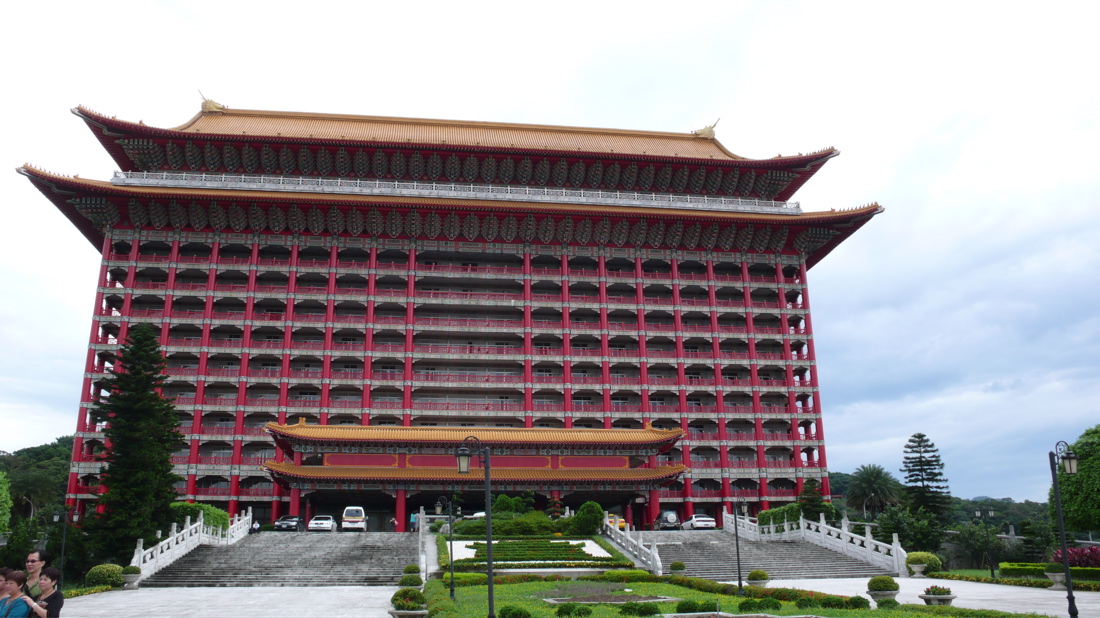
Our accommodation during the holiday was the remarkable Grand Hotel.

View of the Grand Hotel

It may look very grand from the outside, but inside the rooms and facilities are of a regular three star hotel, still, the foyer was quite impressive.

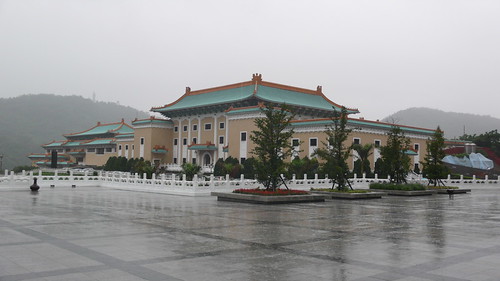
Our first stop was the world famous National Palace Museum. We took advantage of the free guided tour in English at 10am. The well-spoken and enthusiastic lady lead us around the highlights of the museum's many precious artefacts including Chinese porcelain, ivory and jade. The museum has recently been renovated and all the rooms are well lit and all the objects had detailed English descriptions. The audio guide we used when going around for a second time, was also of a high quality and gave useful and interesting information. This is a view of the second building, currently housing an exhibition from the British Museum.


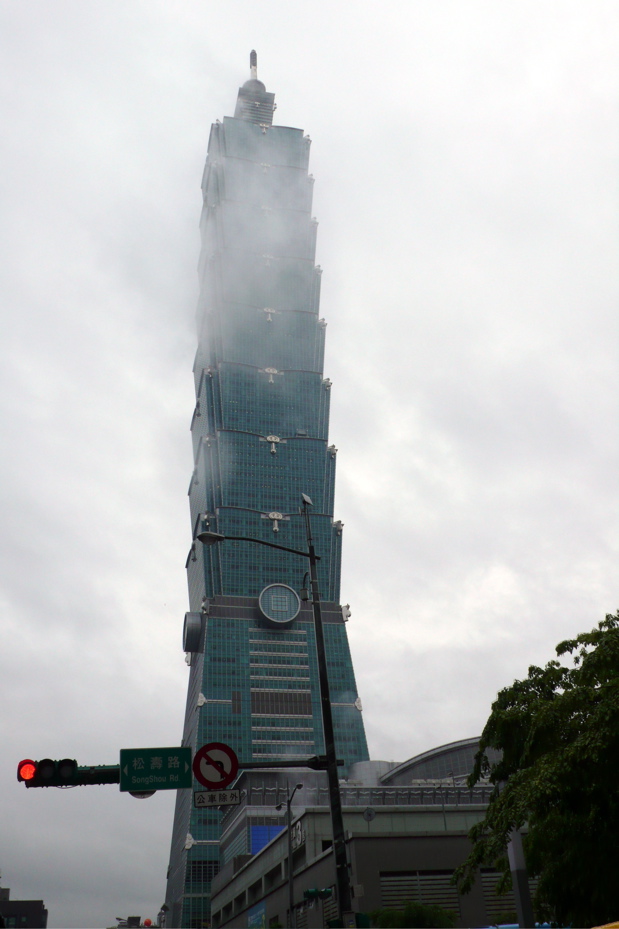
The title of "world's tallest building" is currently held by Taipei 101. This impressive skyscraper stands out on the city skyline and a trip to the observation deck was next on our itinerary. The elevators to the 89th floor take less than 38 seconds and reach a world record speed of over 63km/h (37 mph).
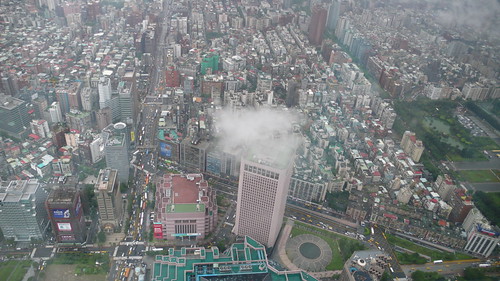
View of Taipei 101 skyscraper from outside on the streetThe weather was not particularly good, but the views over the city were still spectacular.
View of Taipei from Taipei 101 skyscraper observation deckThe clouds over the jungle covered hills were beautiful. The skyscraper also claims to have the world's largest 'mass damper' and they are proud to display the 660 metric tonne sphere in it's enclosure in the centre of the observation deck.

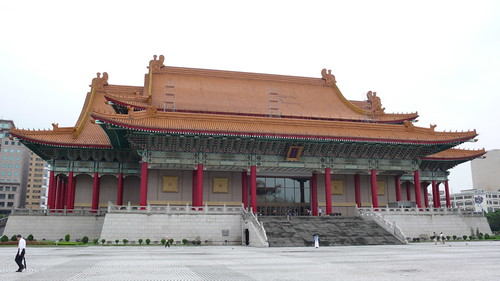
One of the most impressive squares in Taipei is the Chiang Kai-Shek Memorial Hall Plaza. This building is the National Theatre:

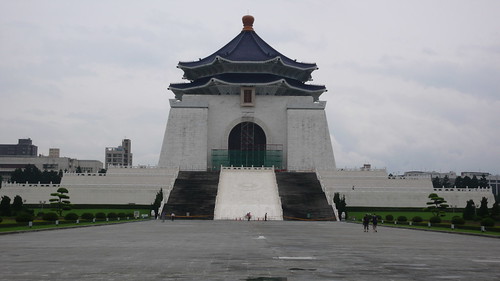
On the opposite side of the square is a similar building, the National Concert Hall, and between the two is the huge white marble building that is National Taiwan Democracy Memorial Hall:
National Taiwan Democracy Memorial Hall( Chiang Kai-shek Memorial Hall)

We took a trip to the National History Museum and were delighted to discover an exhibition of the terracotta army of the Xian Dynasty. We were remarkably lucky to get in without queueing. After seeing the exhibits we came out to find hundreds of people queueing around the block to get in! The botanical gardens form the grounds of the museum and provided a welcome bit of greenery to enjoy.

Taiwan is well known for its green tea and we were keen to go to Pinglin to see 'The world's largest tea museum'. We followed the detailed instructions in our trusty Lonely Planet guidebook and took the MRT, Taipei's very modern and efficient subway system, to the southernmost station Xindian. From there we took a bus for a 45 minute ride further south to the small town of Pinglin and found the museum. There was a reasonable amount of English on the display boards and several rooms of exhibits that were interesting and you get to taste some tea in the gift shop. The museum is not huge, but we felt it was worth the trip.

The Tea museum at Pinglin , Taipei, Taiwan
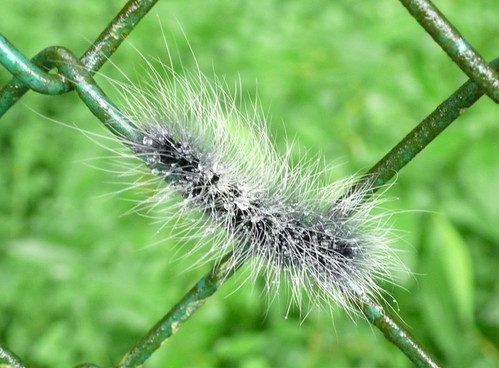
During a walk along the river bank I spotted this hairy little creature:

a black catterpilla with long white hairs with water drops on a metal fence
In the evening we visited Longshan Temple, The photos on the wikipedia page do not do it justice: The intricate carvings and decoration are impressive, the lights dazzling, the smoke from the incense intense and there's a waterfall outside too!

We took a trip to Beitou on the northern edge of the city, at the end of the red line on the MRT, to get closer to the national park. We followed a road winding up the end of the valley through the dense vegetation and discovered this small temple which had great views of Taipei.

temple at the end of the valley in Beitou Taipei,Taiwan

After coming back down into the valley it was time to sample the hotsprings for which the town is famous. We chose a relaxing hot bath in the Sweetme Hotspring resort hotel. [No Dr Fish this time!]

On our last day we just had time to visit the Fine Arts Museum of Taipei at the bottom of the hill from our hotel. There were four exhibitions on: The "Still Life" show of Taiwanese artists was very interesting; There was Taiwanese Photography on display in another room; A sample of ten contemporary Italian artists in another room, and last but by no means least A Retrospective of Su Hsin-Tien’s Cyclical Space Paintings whose style was sometimes very similar to a drawing of MC Esher, one of my favorite artists.
One memorable aspect of the visit was the large number of school children that were being taken round in groups. They obediently sat and listened attentively to museum staff explaining the pictures in front of them.

It was then back on the rickety public bus that goes out to the Taipei's international airport for our trip back to Incheon airport and home to Yeouido.

Wednesday, June 06, 2007

Construction on the AREX railway

Phase 1 of the AREX airport link between Gimpo and Incheon airports opened in March. Phase 2, which takes the line from Gimpo into Seoul Station, has been under construction for sometime now and I have been photographing what I can of the sites where work is occurring.

At Gimpo airport the line is deep in tunnel, it heads north east and rises to the surface to cross the Han river on a new bridge.


On the north bank of the river the next section of the bridge is being built, ready to be moved into position.

The line curves to the east and descends into tunnel to go below Susaek bridge. The line is being built in a cut and cover tunnel running parallel to mainline railway to Susaek station. From Susaek to Gajwa railway station there is a short section being constructed using the "Tubular Roof and Trench Tunnelling method" it proclaims on a banner at the site entrance. At Gajwa I sneaked into the work site and got this photo of the 50m deep excavation. You can just see the guard on the far left coming over to order me off the site.


However it seems they had miscalculated something and the retaining wall on the right hand side of the photo collapsed suddenly on Sunday afternoon :


View of collapsed retaining wall with railway lines hanging in midair at building site
[Photo courtesy of the Korea Times newspaper.] Thankfully no one was injured. The construction site worked evacuated the site at 4:30 when they realised the wall was not going to hold, but no one thought to inform the railway that they may want to stop trains until 5:00pm. The last train crossed the tracks just two minutes before the collapse. The chosun has some choice words to say about this!

I visited the site yesterday and there was a continuous stream of trucks delivering material to fill the hole to be able to reinstate the railway lines as quickly as possible. It was a local attraction with at least twenty men watching the proceedings. I hope this setback does not delay the opening date of 2010.

From Gajwa there is another short section not in cut and cover before the open trench reappears. The trench follows the line of the previously existing Yongsan railway line traces of which can still be found at a couple of the roads that cross the work sites. At Hongik University there is more major excavation for the new station which will connect with Subway line 2. The trench continues to Gongdeok where there will be another station. The line then continues in bored tunnel under the hill to come out on the west side of Seoul Station.

Update : Matt has more photos.

Monday, June 04, 2007

SamcheongGak: Seoul's secret sanctuary

If someone had told me last week that there exists a place, only ten minutes drive from Downtown Seoul, that is green and peaceful, with views of undisturbed forest and not a tower block in sight, I would not have believed them.

But, thanks to a Korean friend who took us there, we have discovered such a place. SamcheongGak. This is the view from the terrace looking towards the city fortress walls, beyond the hill is the presidential residence the 'Blue House'

Samcheonggak view from the terrace towards the city walls

In 1972 the Red Cross built it in the pine forest behind Bukak mountain as a venue to hold a historic meeting between North and South Korea. The buildings were reserved for use by high ranking government officials until 2000 when the Seoul Metropolitan Government bought the site and opened it to the public as a venue for traditional Korean cultural performances in 2001.

This small valley holds a peaceful escape from the hustle and bustle of the city that anyone can visit. There are six traditional buildings, the largest, Ilhwa-dang, contains a restaurant, tea house and the performance hall. This building is used for classes in tradition arts such as the tea ceremony and pottery.

SamcheongGak view of one of the smaller buildings on the site

You can stay overnight in two of the other buildings.

If you'd like to take a trip up to the gate in the fortress walls you'll need to book up at least a week in advance to join one three daily visits to Bukak mountain.

There is no public transport to SamcheongGak, but there is a free shuttle bus service from Gwanghwamun Station (line 5) Exit 3. Buses run daily from 10:00 a.m. to 10:00 p.m. Timetable.

Sunday, May 27, 2007

The 4th World Ceramic Biennale Gwangju and Yeoju

Not content with visiting the Ceramics Biennale at Icheon, we made trips to both Gwangju and Yeoju sites to get the full expo experience.

At Gwangju the major exhibition was from the Topkapi Museum in Istanbul and showed Chinese and Turkish ceramics from the collection.

At Yeoju we saw the other half of the competition "Ceramics for Use". The Bat took the camera off me and photographed all of her favourites. She enjoyed the works of art so much that she has now created her own blog to show off the photos. Click on over to Blog-bat.blogspot.com to see the 40 photos we've uploaded.

Tuesday, May 22, 2007

Lotus Lantern Festival Seoul

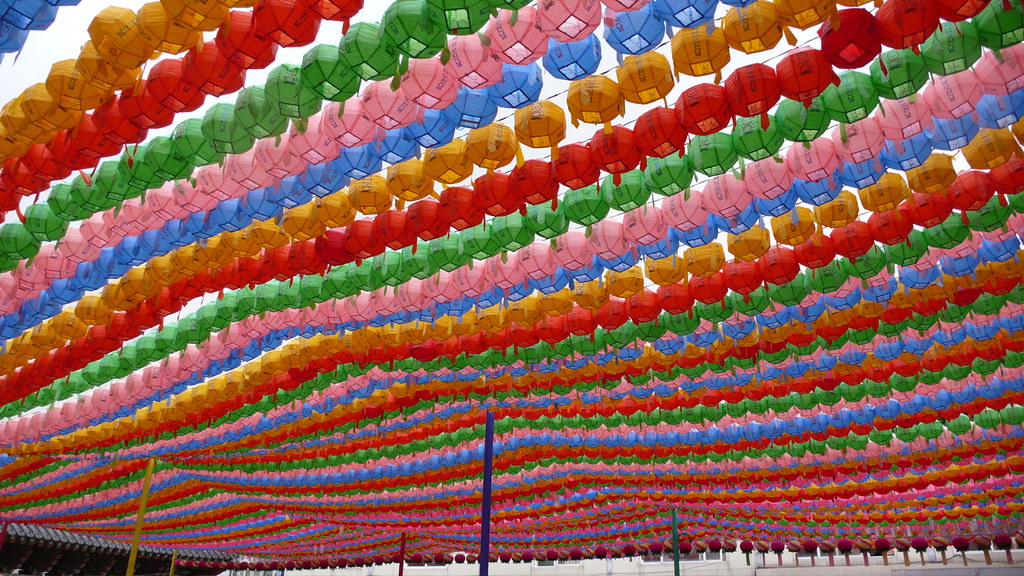
After meeting the authors of The Korean Way of Tea we walked the short distance to the Jogyesa temple. It was colourfully decorated with thousands of lanterns for Buddha's birthday celebrations.

Jogyesa temple, colourfully decorated with thousands of lanterns for Buddha's birthday

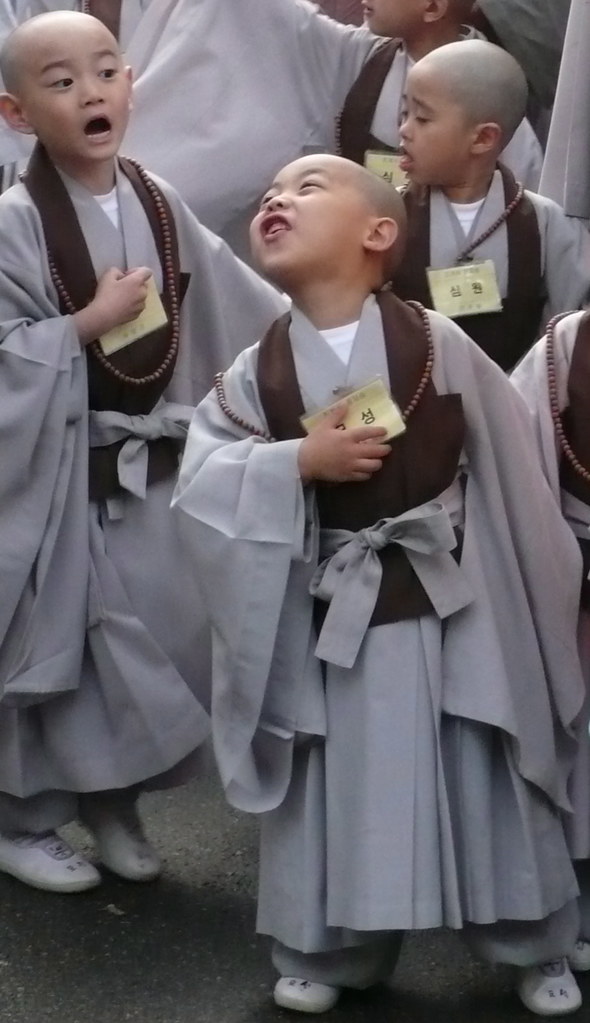
These small children drew a lot of attention, they look so grown up in their buddhist monk's robes, but they were still very playful.

small children dressed in Buddhist monks robes

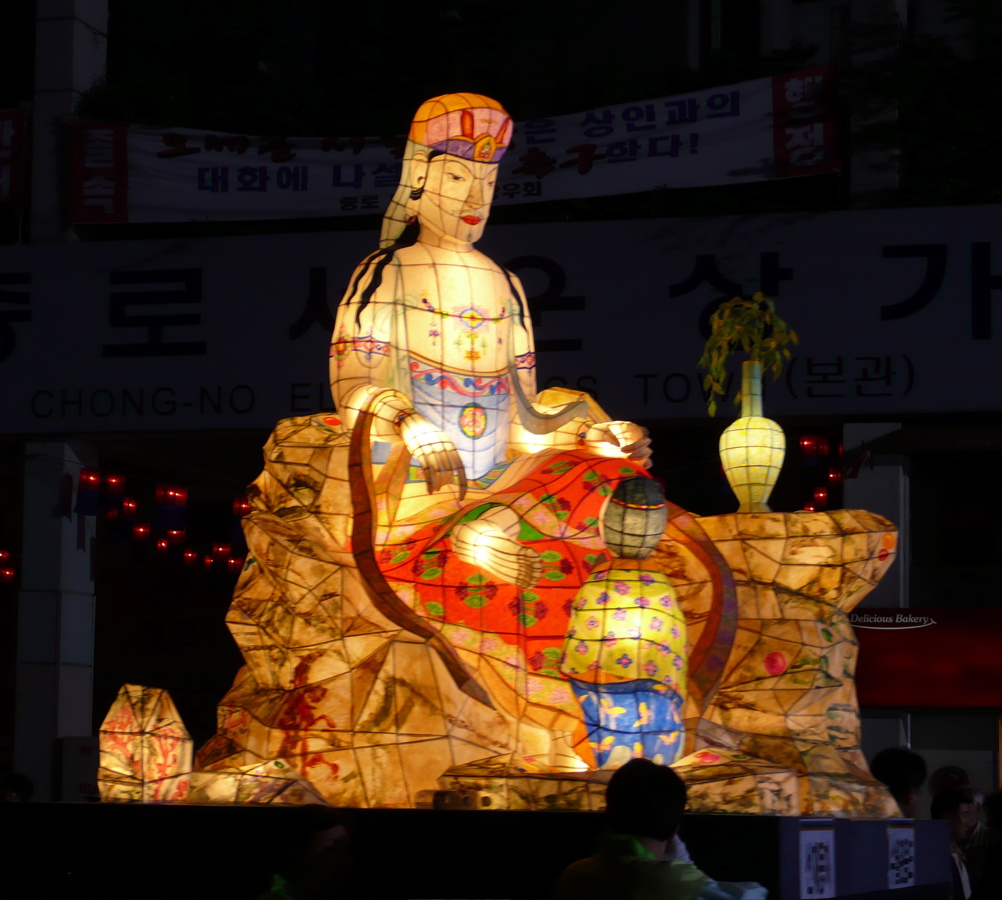
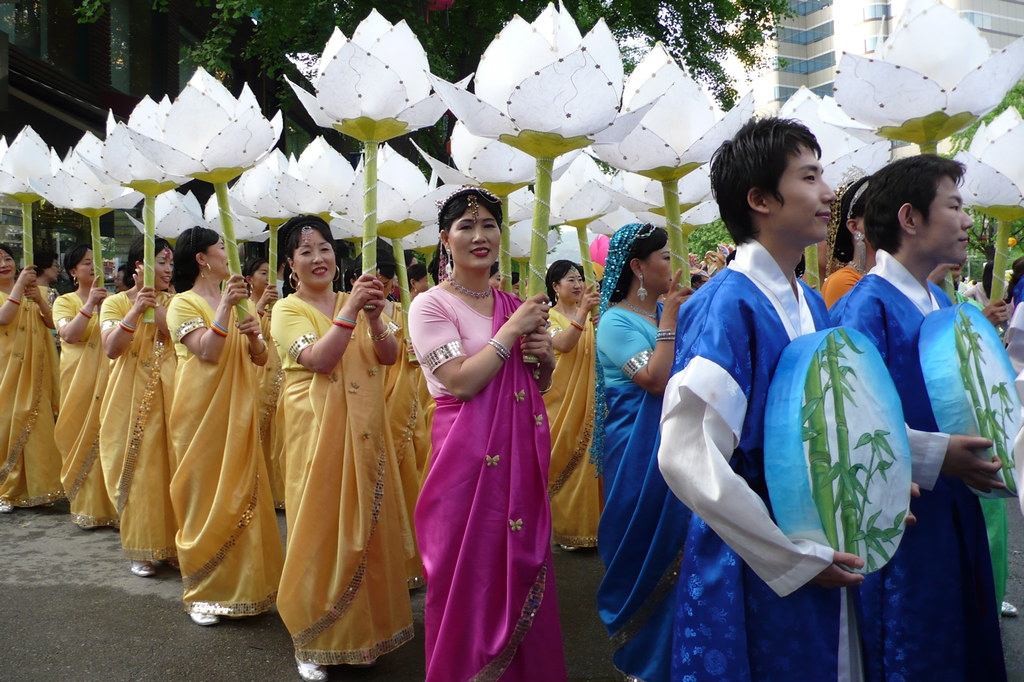
There were two parades during the weekend festival. On Saturday there was a short parade from Jogyesa through Insadong along Jongro to a temporary stage setup on the road near Jongak station.
These were some of the participants :

participants in the buddhas birthday parade

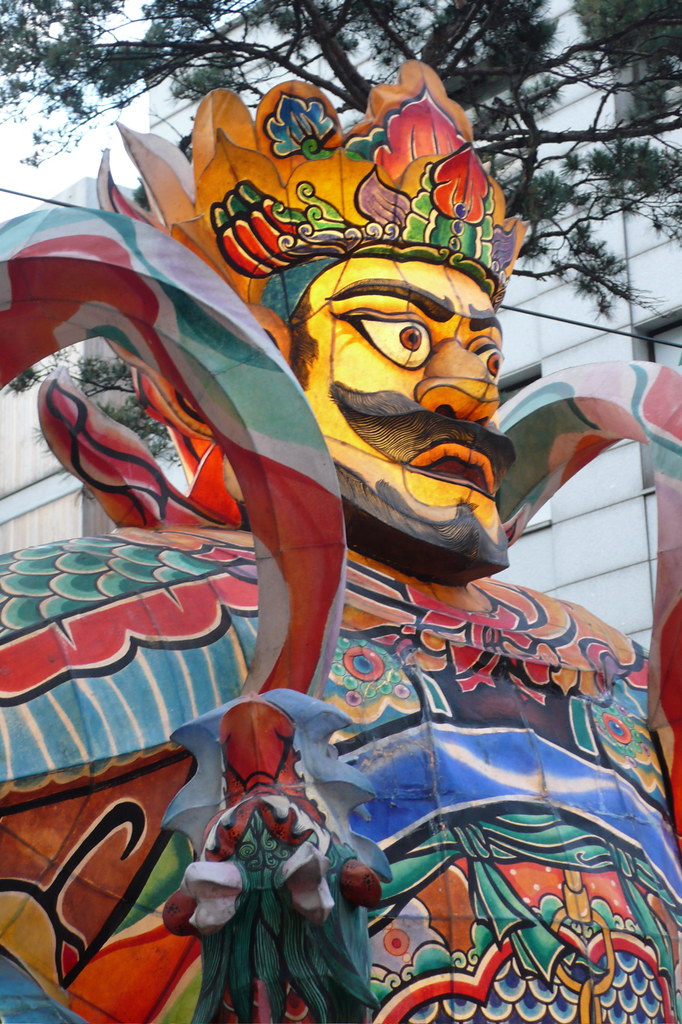
One of the floats in the parade.

One of the floats in the parade.

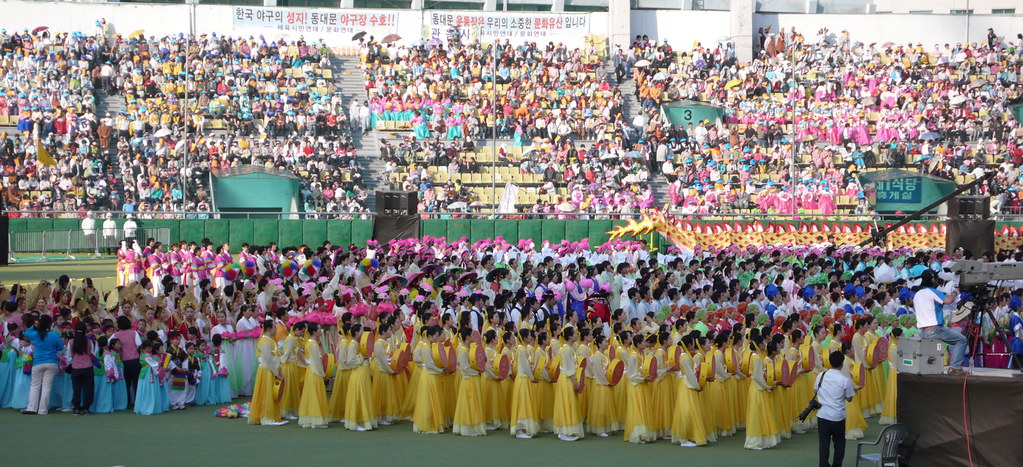
On the Sunday was an even more spectacular and longer parade. We went to Dongdaemun stadium to watch the opening ceremony. The entire crowd seemed to be part of the parade and festival. There was much singing and dancing and crowd participation.

Dongdaemun stadium opening ceremony. The entire crowd was part of the spectacle

The parade started at 6:30pm and continued until 9:40 pm.


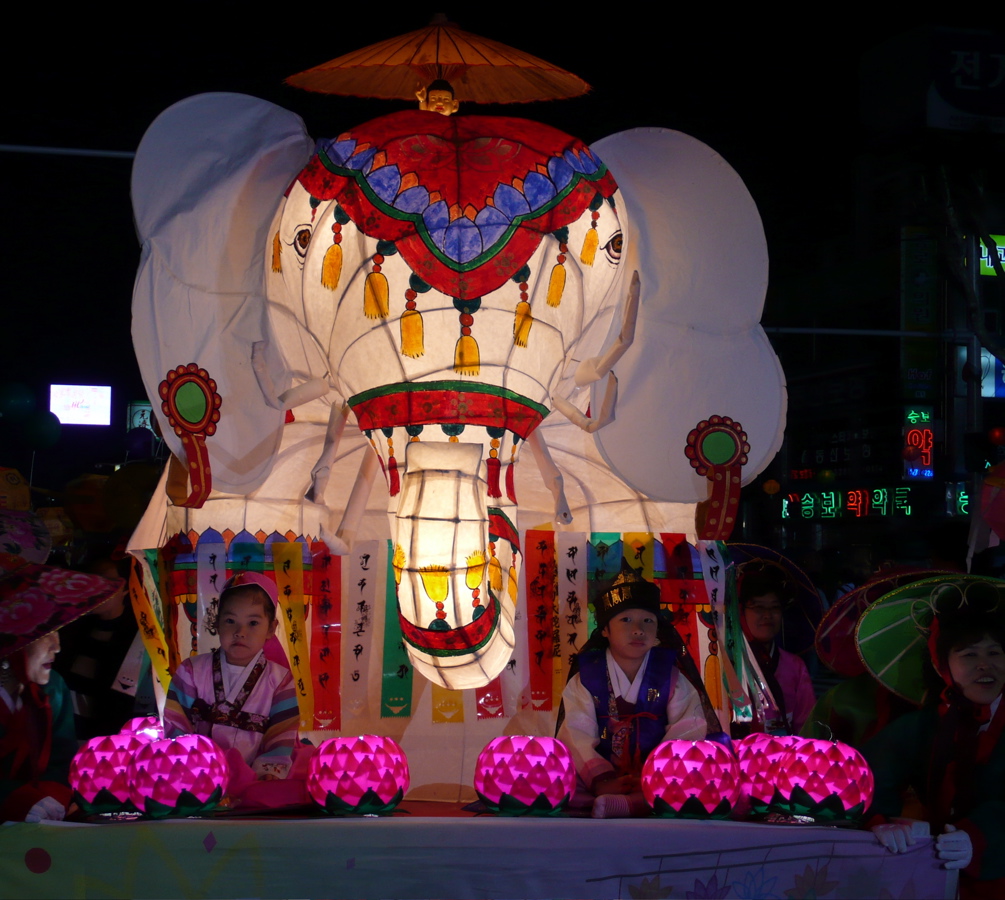
These two young children look like they had had enough fun at the festival, it was around 9:30pm when they went past us.

two small children on a float with an elephant on it, in the parade.
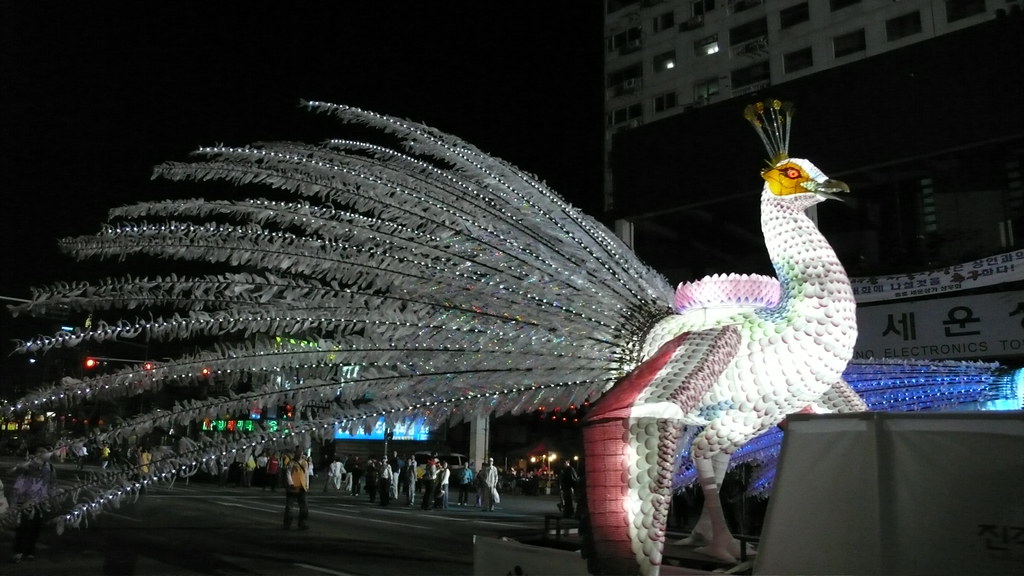
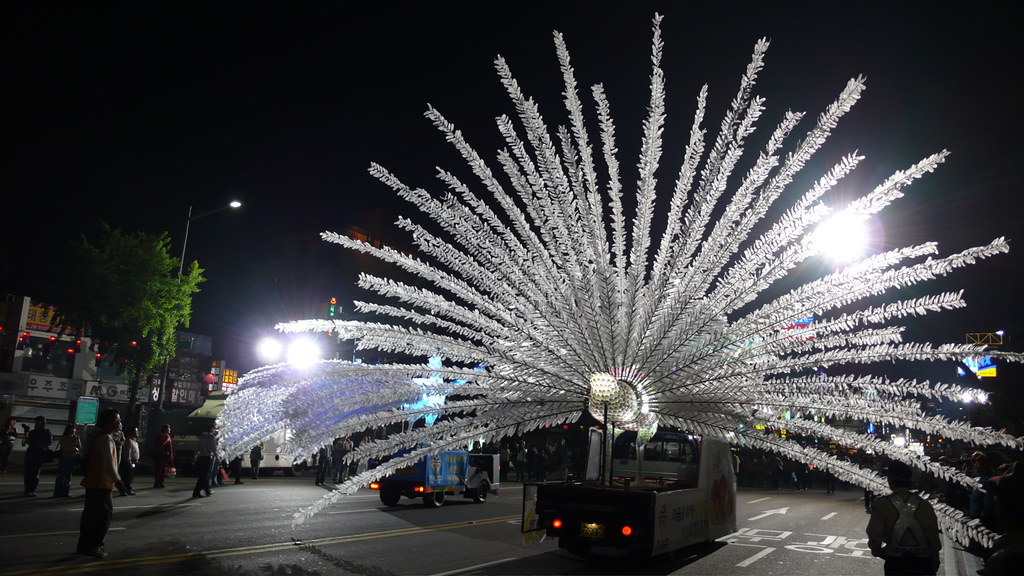
This was one of my favourite floats


and this was the back of it after it went past.

View of the rear of the peacock float in the parade

Sam has lots more photos of the event here and here.

Sunday, May 20, 2007

The Korean Way of Tea

Seoul Selection have recently published a small but perfectly formed book entitled 'The Korean Way of Tea, An Introductory Guide' by Brother Anthony of Taizé and Hong Kyeong-Hee. It is the first English language book written specifically about Korean tea.

We had the pleasure of meeting the two authors and sharing some Korean tea with them at an event to celebrate the new work at Seoul Selection bookshop near Gyeongbokgung. Here are the authors, Brother Anthony in the foreground.

Brother Anthony of Taizé and Hong Kyeong-Hee authors of The Korean way of Tea book at Seoul Selection
Brother Anthony is an Englishman who came to Korea in 1980 and became interested in Korean tea after tasting the finest hand dried Korean tea in the idyllic setting of a traditional Korean house on the southern slopes of Jiri mountain.

The book describes the labour intensive process of picking, parching, rolling, separating and drying the shoots of the Camellia sinensis (tea) bush. The Korean tea ceremony and the utensils used are explained in easy to follow steps. 'The History of Tea in China' and 'How Tea came the West' are also covered in brief but detailed and well researched chapters.

Photo of Cover of The Korean Way of Tea book with a tea cup
Preparation for the book lasted a year and began in May 2006 at the start of the tea picking season when many of the photographs were taken.

Although it presents itself as an introductory guide, the information presented is precise and very well written and the authors' enthusiasm for their subject shines through. The meditative (seon or zen) aspects of tea are touched upon often, and overall style, illustration and poetry all contribute to creating a book that is a wonderful companion for a quiet pause. Just like a delicious cup of tea.

The 124 page softback book costs 12,000 won, available from Seoul Selection and local bookshops.

Brother Anthony has a homepage with more details of his other books and interests.

Thursday, May 17, 2007

From Seoul to Beijing by Train?

Well, not just yet. But today's historic test run of two trains between North and South Korea is a step in the right direction.

While South Korea is geographically on a peninsula, logistically it is an island. The last trains to cross the border were in the 1950's. (A fact unknown to more than one Lonely Planet traveller)

Today at two locations diesel trains crossed the heavily fortified Military Demarcation Line between the two countries. The two trains carried a total of 300 carefully selected passengers in each train, 100 from the south and 50 from the north.

In the eastern section, the train departed from Kumgangsan Station in the North for the South's Jejin Station on a 25.5-kilometer track. The other train left Munsan Station in the South bound for Kaesong Station in the North on a 27.3-kilometer track in the western section.

The event, including speeches by ministers from both countries was covered live on four major TV stations this lunchtime.

Initial hopes are for regular trains to start carrying workers to the industrial centre at Kaesong, and for tourists to be able to use the trains for visiting Mount Kumgang in the east, in place of the existing bus route. No North Korean visitors to the South would be expected, I guess.

Meanwhile, the railway between the North Korean port of Najin and the Russian town of Khasan is being eyed up for repairs and improvement by the Russians, who would like to develop the port into a logistics hub and and future oil and gas terminal. The port is also close to the Chinese border and Beijing has promised Pyongyang $1 billion to improve the port and the railway as well.

According to Senior Executive Director of Korail, 2008 is the target for introduction of through-trains between Seoul and China. This would, of course, require the co-operation of the North Koreans, who already run through-trains from China to Pyongyang.

That target seems a little optimistic to me, considering how long these tests have taken to agree, however, I can foresee the possibility of the introduction of freight trains along the route at some point in the future. That should reduce transportation costs for South Korean exporters. Maybe one day the station at Dorasan will see some cross border passengers.

News links : Yonhap , BBC (including video) , KBS , NY Times , Yahoo News , MBN (in Korean, but with video), Hankyoreh , Australian News, and a recent strong editorial from the Chosun Ilbo.

Swimming with the fishes in Yulpo

This post completes the details of our trip. (See part 1, part 2)

We left Mokpo and drove to nearby Wolchulsan National Park. We stayed at the hotel there close to the Dogapsa entrance.

We enjoyed a quiet walk in the park the next day before heading off for the nearby Yongam pottery centre. We found the kiln and a gift shop in the very pretty village of Gurim, but despite the shop keeper's attempt at giving us directions, we were unable to find the pottery centre. The village must be one of the most attractive we've seen in Korea, with a small area of traditional houses and stone bridges over the stream.
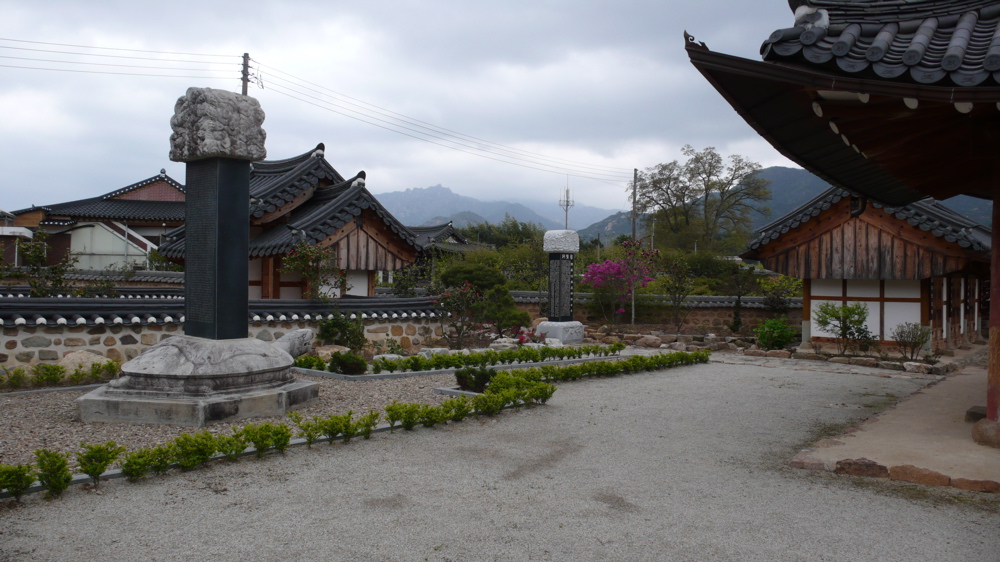
view of traditional houses in Gurim village
We headed south to another pottery centre at Gangjin. This was much easier to find as it was marked on our map! The site includes another traditional wood-burning kiln, many shops and a museum housed in two large buildings.

Note the porcelain tile wall on the exterior of the museum and the large pot in the foreground

Here is the traditional wood-burning kiln. Used to make royal celadon ware for centuries.


The first museum displayed mostly potsherds of Korean celadon (blue-green) porcelain with just a few explanations in English; it was a little disappointing, the second museum had a special exhibition of around thirty pieces from the Limoges region of France and a selection of modern Korean and Chinese ceramics.

Here is a very fine modern piece from China


The grounds around the museum are scattered with large pieces of original celadon, each worth a considerable amount. Here is a celadon fountain with perhaps 13 individual porcelain pieces.


Leaving Gangjin we drove around the headland and arrived in Yulpo. We inquired at the huge Yulpo Spa resort about the cost of a room. 248,000 won was a trifle above our budget, we'd been paying maximum 50,000 won up until now, so we drove a few hundred meters back into town and found a minbak beside the SK petrol station, above a restaurant, for 40,000 won instead.

We were in green-tea country, just a few kilometers south of the main tea-producing area in Boseong, and so everything had a green-tea theme. That evening I sampled the delights of green-tea-pork, which is a local speciality, but I couldn't tell the difference between that and the normal Samgyeopsal I've had back in Seoul.

Yulpo Spa is run by the local council and is open to the public daily from 6am to 8pm; the spa is best known for Yulpo Haesu Nogchatang ( seawater and green-tea bath ) though it offers much more than this. The spa occupies 4 floors and offers views of Yulpo Bay from the baths and from the open area on the top floor. Visitors may don yellow-earth-impregnated kit and wander about the very spacious, warm facilities luxuriating in a sense of Korean "well-being", to use the industry jargon. Yellow earth is very well-known in Korea and China for its healthy properties.

The next morning we returned to Yulpo Spa, we paid the 5,000 won entrance fee and separated to go to our respective gender's saunas. I was relaxing in one of the hot pools when one of the attendants came around asking for a "Mister Jon". I was the only westener, so he found me fairly easily and led me back into the changing area and indicated I should put on some shorts and a T-shirt he proffered. He then led me upstairs to the fourth floor and a large pond filled with green tea and thousands of small fishes!

The Bat joined me and explained that she'd gone exploring, found this treatment area available to both sexes, and she'd paid an extra 5,000 won each for the experience called 'Doctor Fish'. The idea is that you sit in the pool wearing a bathing costume, exposing as much flesh as you wish, and these small garra rufa fish gently nibble at your dead skin and revitalise it. Personally I found it was very tickly and a bit too high on the 'ick' factor for my liking, but apparently for psoriasis suffers it does offer some relief.

Dr Fish is also available in Icheon at the Termeden Spa we discovered later [Infact visitors to the Ceramics expo can get a 30% discount off the entrance fee to the spa. Pick up a voucher at their stand at the fair] , and The Guardian had a report on it at a spa in Ireland too. It's got a great photo of what to expect. If you go to Yulpo, make sure to ask for 'Doctor Fish' at reception as there are no posters or information at the cash desk. There are two other saunas in the treatment area, one with hot pebbles and one with hot quartz rocks to lie on, both were very pleasant indeed.

Suitably refreshed we continued our journey north. For the last night of our trip we stayed just outside Deogyusan National Park in another minbak. The small village near the Anseong entrance was very quiet, almost deserted, we found out the next morning this was because the route into the park here was closed temporarily. There was nothing in English on the sign, but I believe this restriction was due to the risk of fires at this time of year.

We drove around the park towards another entrance, but this time, rather than use one of the major paths available from the ticket booth, we chose a road leading into the park that was shown as petering out to a dead end. We parked at the end of the tarmac and continued on foot on a small path past the cultivated area up into the woods. This approach gave us the least disturbed visit to a national park we have ever experienced. The path was a little more difficult to follow and a little overgrown but we met no-one once we passed the ginseng (Korean "insam") field at the head of the valley. The scenery was a lush green and the wildlife was much more in evidence than on other national park trips.

Gentians ( Gentiana sp.) are generally alpines but here they were at low altitude in Deogyusan.


From there we drove back to Seoul along the expressway.

Some observations on our trip:
  • It does not have to take three days to get to Jindo, you can get a bus from Seoul, it takes about six hours, but we decided to take the scenic route and see more of the country on the way down.
  • All the locations we visited can be reached by public transport. The Lonely Planet guide book has detailed instructions for this.
  • The best places to find small hotels and minbak (rooms for rent in private houses) are near the serice areas of the national and provincial parks. It's a good idea to learn the Korean for minbak as most of them do not have signs in English. The owners are unlikely to speak English, but with sign language we had no problems.
  • For good places to eat look out for the 'Good Restaurant' sign, we've not been let down by any establishment showing this sign.
  • The road atlas we used is published by the Jungang Atlas Co. Their website is Korean only, but the atlas has most place names in English and Korean. Available in bookshops for 12,000 won.
  • The National Parks Authority publishes a guidebook for the National Parks of Korea. It includes maps and photos of all twenty parks. The maps do not have any detail of the area outside the park boundary, but are very useful for deciding which entrance to aim for at each park. Available in large bookshops and some park offices for 10,000 won.

Monday, May 14, 2007

The 4th World Ceramic Biennale

Continuing my theme of festivals worth visiting, we visited the Ceramics World Exposition in Icheon last week.

We took the bus from the Express Bus terminal in Seoul, as suggested on both the KNTO site and the wocef site, to Icheon Bus terminal, a 90 minute journey south from Seoul. On arrival there were no signs indicating the location of the event, luckily the taxi driver understood the word EXPO and dropped us off at the event in less than 5 minutes.

The Expo site is in a valley surrounded by woods and bounded by a man-made lake at the valley mouth. Four temporary gallery areas provide hundreds of artists space to display and sell their ceramic wares. Objects for sale range from small items of jewelry for a few thousand won, to large intricate open-ware celadon vases going for 35 million won. A huge variety of sizes, shapes and colours of plates, vases and decorative pieces were on show.

Walking up the slope we walked through a gallery in the shape of a traditional wood fired kiln. It contained examples and details on the history of ceramics on the peninsula and in Asia in general.

At the head of the valley is the permanent exhibition hall, entrance fee 5,000 won. On the ground floor were seventy entries in the 'Ceramics for expression' half of the competition. Over 2,400 objects from artists around the world were submitted to the competition in two categories. The shortlisted items for the other half 'Ceramics for use' are exhibited at the expo site in Yeoju.
On our way out, the English speaking member of staff stopped us to ask a few questions about our visit to the Expo. She was most distressed to hear that we had not known of a shuttle bus service from Seoul to the Expo. When we showed her the printouts from the websites she promised to get them updated. In the meantime here is a scan of the timetable with our translations on it.

The top list is for the bus from near the Coex mall to Gwangju and back, the second list is from Insa-dong to Icheon and back and final list shows the one bus a day from Insa-dong to Yeoju and back.

She also explained the two other sites for the expo Gwanju and Yeoju are both within 30 minutes drive from Icheon, we originally thought Gwanju was the city in Jellonam-do , four hours drive south of Seoul, but the one you want is in Gyeonggi-do, much closer!

The exhibition closed at 6pm and after a meal at the excellent food court and a walk around the lake that includes the obligatory sculpture garden, we boarded the shuttle bus for Insa-dong for the trip back to Seoul.

The Expo only takes place once every two years and even if you don't think pots are really your thing, I still highly recommend a trip to the event to see the creativity on display there before it ends on May 27th.

I had a day off from photography, which is probably a good thing otherwise I could probably have taken several hundred shots of the weird and wonderful works of art, instead I'll leave you with a shot of four of the winners


courtesy of a Korean site.

Thursday, May 10, 2007

The Top 5 festivals in Seoul

It seems spring is the best time of year for festivals in Seoul. Here's my personal top 5 festivals in the capital city.

1. The Cherry Blossom Festival
The sight of hundreds of Cherry trees all in blossom along the road around the National Assembly building in Yeouido was an especially beautiful spectacle. My photos are here and here, more photos of blossom in Korea from contributors to the flickr Korean Images group.

2. Hi Seoul Festival
I've already posted a couple of items on the festival that took place over eight days at the start of this month. There was the High Wire competition and the drumming and Taekwondo at Gyeonghuigung palace. Here's a one minute recording of the energetic female drumming group from that day


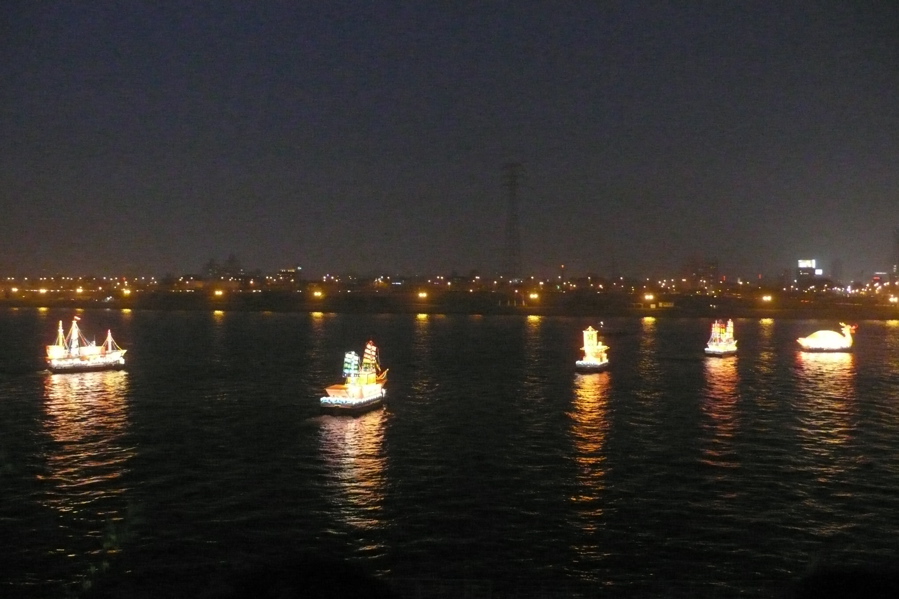
I've also posted on youtube a two minute clip of the drumming from the Non verbal Performance we watched. Here's a shot of the illuminated boats departing their mooring at Seonyudo park:
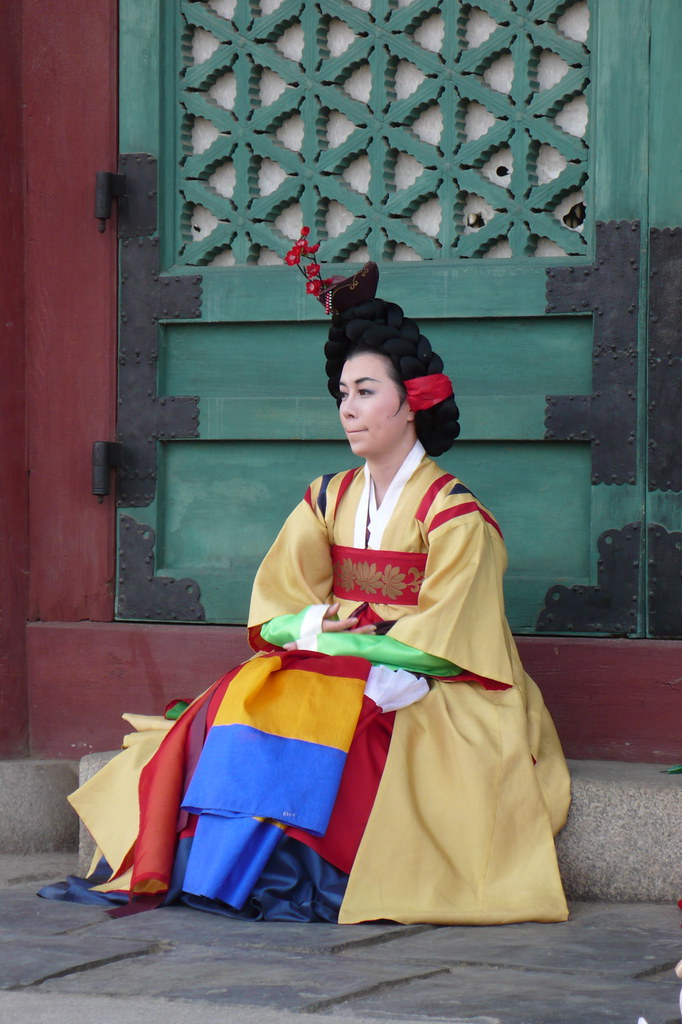
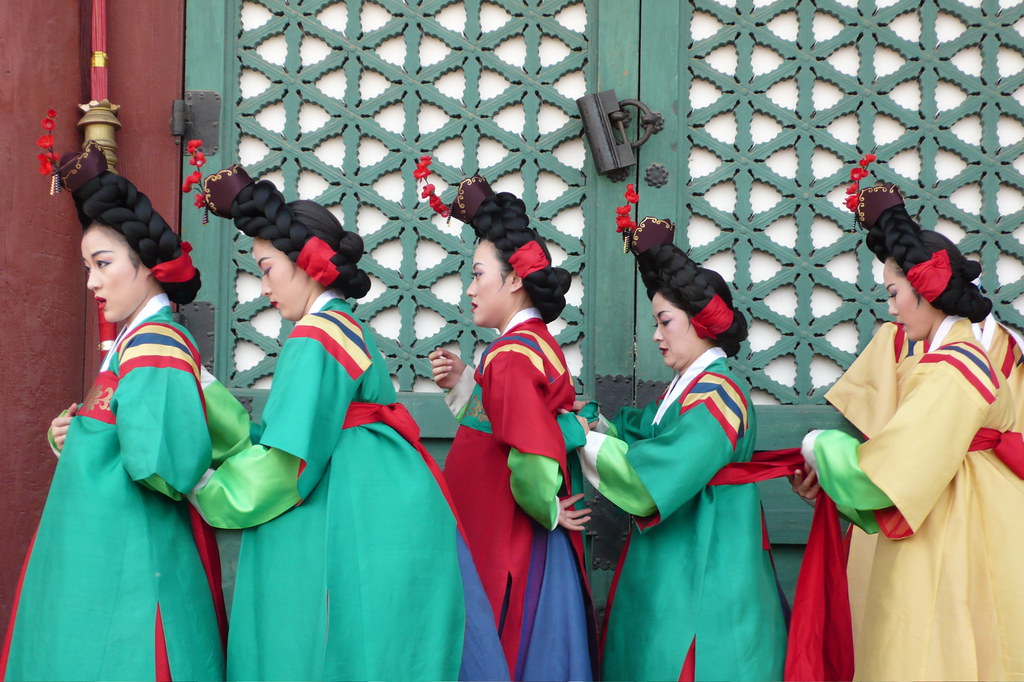
Illuminated boats on the Han River as part of the Hi Seoul festivalOn the Saturday afternoon was the re-enactment of the coronation of King Sejong. This event took place in the Gyeongbok palace. Here's a couple of photos of some of the dancers preparing to go on stage.

Lady performer in Traditional Korean dress preparing to go on stage

Dancers in Korean traditional dress preparing to go on stage

If you were at the Hi Seoul Festival and took a good photo, the organisers are running a photo and video contest with cash prizes, hurry the competition closes on May 13th.

3. Jongmyo Daeje
This spectacular parade and sombre and ancient ritual was a fascinating experience. Erkin was with us that day and has some great photos on his blog.

4. Lotus Lantern Festival for Buddha's birthday
The festival is happening during the next few weeks. There are a number of events occurring in and around Seoul and at temples throughout South Korea leading up to Buddha's birthday on May 24th. I'll be busy photographing that this month. More details at the Lotus Lantern Festival site.

5. Seokjeondaeje
Seokjeondaeje Memorial Rite is one of Korea's most important sacred rituals in Confucianism. It takes place at the Confucius Shrine (Daeseongjeon Hall) at Sungkyunkwan University twice a year in March and September.
This one I've had the most problems finding out about. There is a video of it here and hints and notes about it at several travel websites and a reference here, but no firm details. The Sungkyunkwan University website does not even mention it. I will have to report back on this one later.

Some upcoming events in Seoul are:
The Korea International Arts fair at the COEX Mall. The show includes over 5,000 works of art and runs until Sunday.
The Green Film festival starts May 17th featuring 112 films from 23 countries.
The Biggest K-Rock festival ever starts on the same day. If the names Boohwal, Black Hole, Black Syndrome, The Rock Tigers, Crying Nut and Peter Pan Complex mean anything to you then I'm sure you already know that the venue is the Seoul Fashion and Art Hall located in the middle of Dongdaemun. Ten rock groups will perform each night for the 10-day festival from 8 p.m. to 2 a.m. between May 17-26.

There are plenty more festivals throughout the country during the year including the Firefly festival in Muju, The Busan Film Festival (the Cannes of Korea), The Boryeong Mud festival in July, which is popular with ESL teachers, The Chuncheon International Mime Festival is on at the end of this month, and the Hadong Wild Tea Festival is coming up this weekend. Check out the KNTO and Invil village websites for more festivals.

This post is a contribution to the pro-blogger Group Writing Project organised by Darren Rowse. Check out the hundreds of other entries from day 1 and day 2 that bloggers around the world have posted on the topic of 'Top 5'. All manner of subjects from Top 5 music video parodies to Top 5 techniques for sermon idea generation are covered.

Wednesday, May 09, 2007

New Korea ESL jobs listing service

This new site, Restohof, is a compilation of ESL jobs in Korea. What’s different about this site is the fact that people can vote and leave comments under each listing, which gives job seekers an idea of what they may be getting into.

Jobs are culled from three different sites currently : Dave's ESL Café,
the ESL Teacher’s Board and Seoul Craigslist.

If you are interested in coming over to Korea to teach English as a second language, check it out, as there are one or two private language schools (hagwons) you may not want to work for out there. Read the story of Joe, the blogger at ZenKimchi for an example and the latest update on this story at Lost Nomad and Reporter's Notebook.

read more | digg story
H/T Lost Nomad.

Monday, May 07, 2007

Hi Seoul festival Jongmyo Daeje

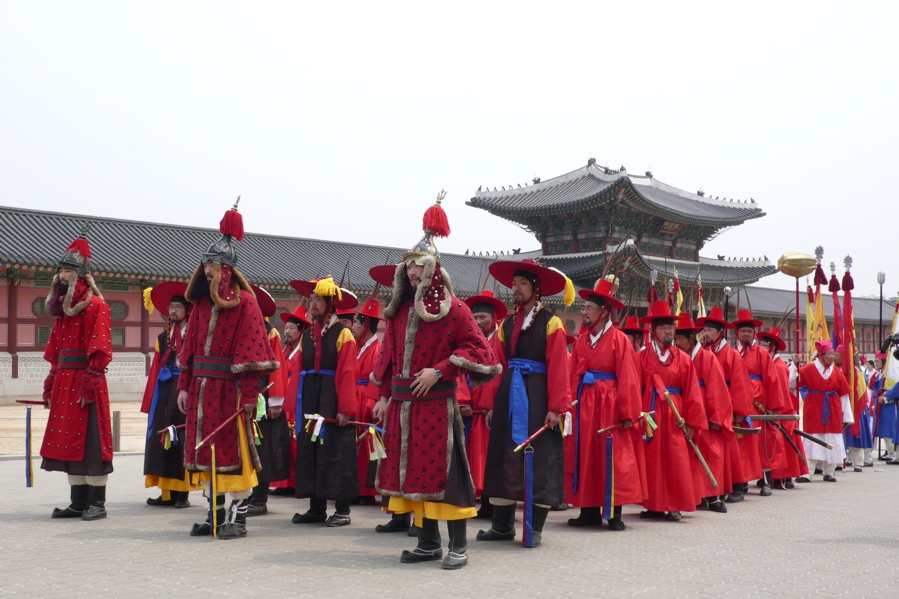
Sunday was the final day of the Hi Seoul 2007 Festival. The Jongmyo Daeje is a ceremony honouring the Royal ancestors. It now takes place once a year. The event started with Eogahaengryeol, The parade of the Royal carriage from Gyeonbukgung through Seoul city centre to the Royal Shrine at Jongmyo.

group of officals ready to start parade in front of palace

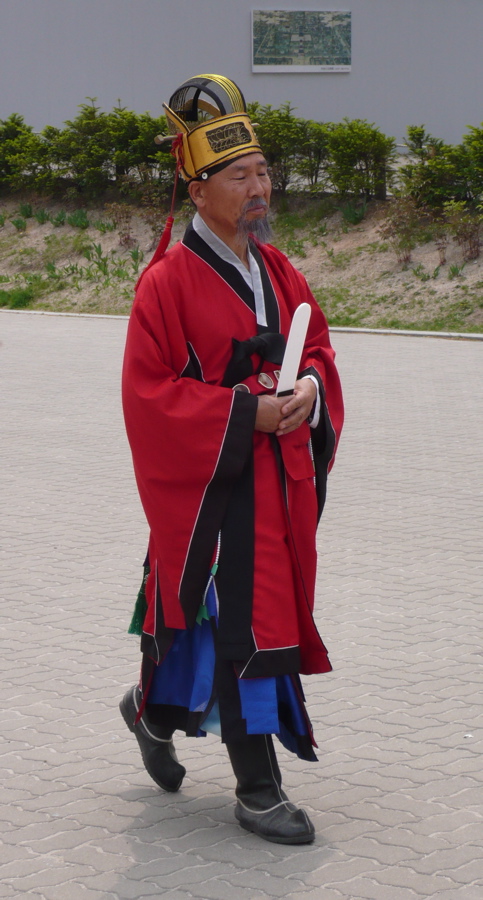
One old gentleman in the parade

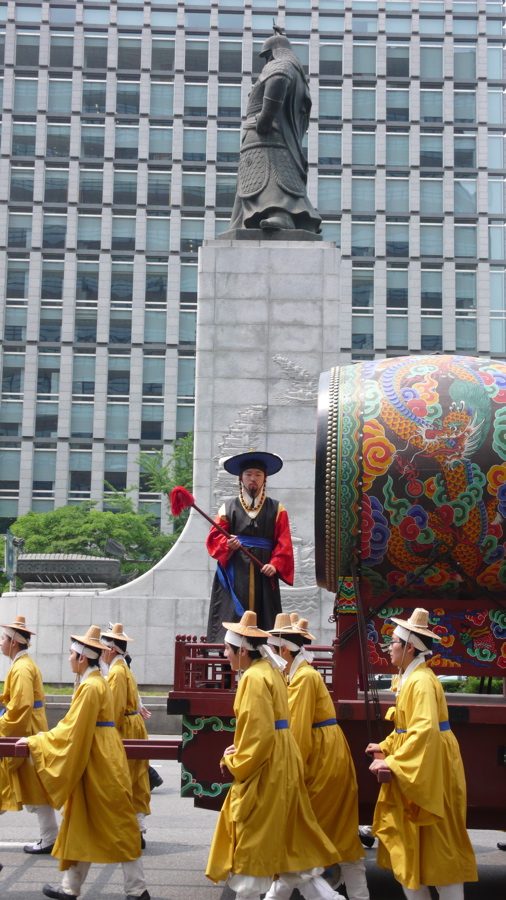
I caught this shot of the drummer just in front of the statue of General Yi Sun Shin on Sejongno opposite the Kyobo building.

rummer just in front of the statue of General Yi Sun Shin on Sejongno. This was part of the parade for the Jongmyo Daeje from Gyeongbokgung to Jongmyo

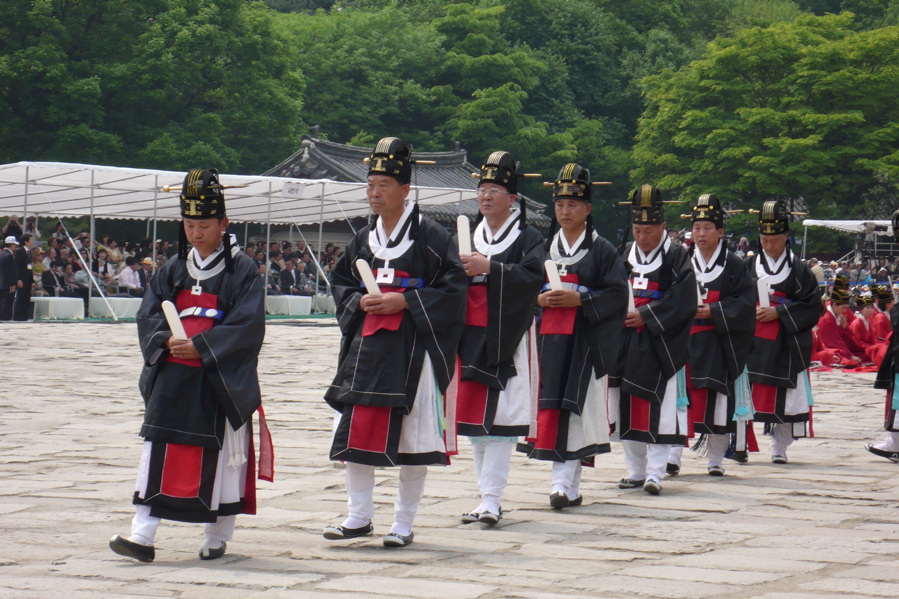
Inside the shrine we watched some of the memorial service. It has eleven separate sections. The music performed during the ceremony Jongmyo Jeryeak is particularly special and was proclaimed a UNESCO Masterpiece of the Oral and Intangible Heritage of Humanity in 2001.

Officals taking part in the Ancestral rite at Jongmyo shrine